ANN–BNN
Where learning lives in artificial and animal learners: a prior, an inference made in state, and a write into structure. One conditioning instrument, one ideal observer, and a week of pre-registered runs on the write channel.
Where learning lives in artificial and animal learners: a prior, an inference made in state, and a write into structure. One conditioning instrument, one ideal observer, and a week of pre-registered runs on the write channel.
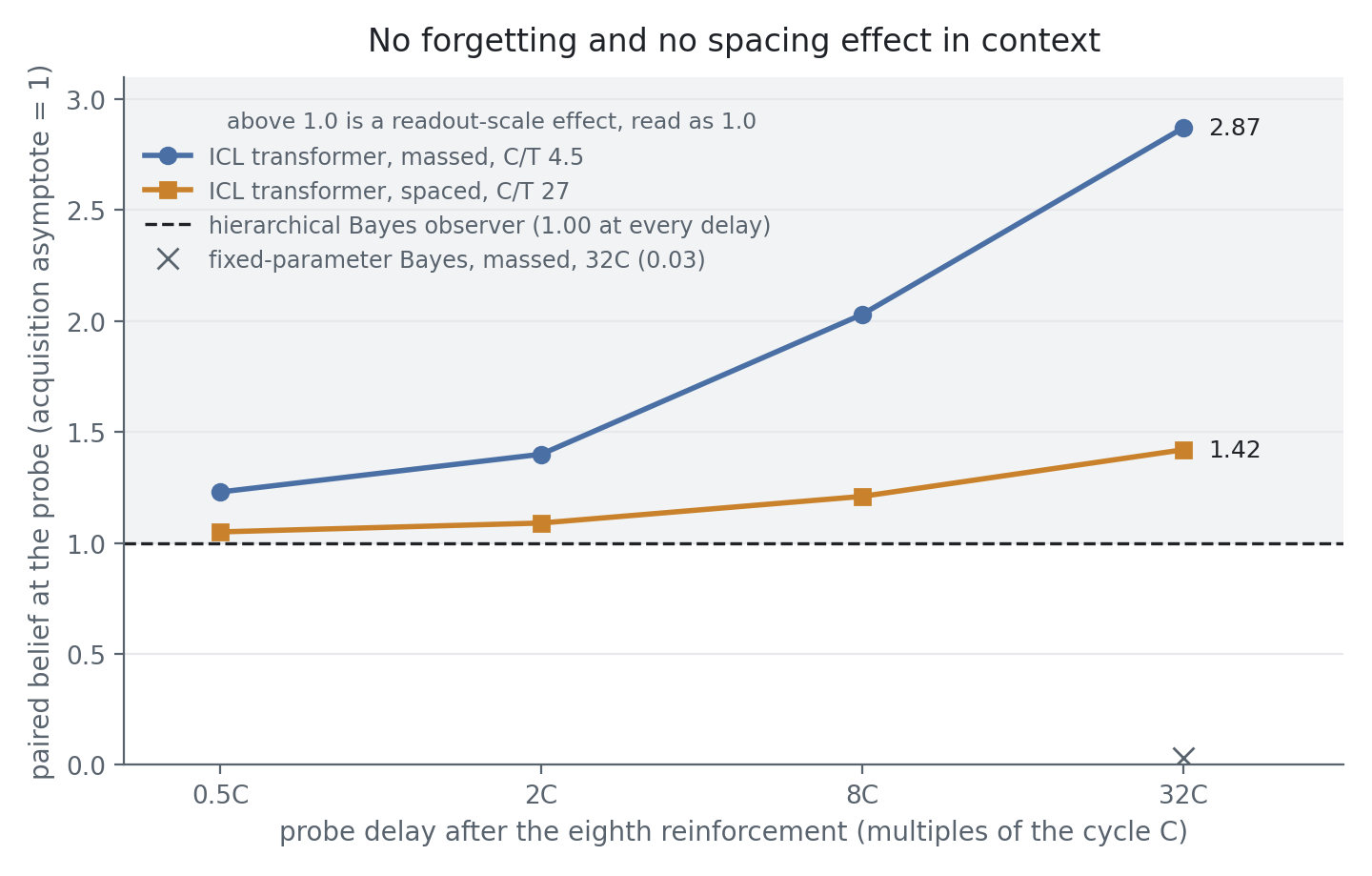
Where learning lives: prior, inference, write
Every learner is three things: a prior it starts with, an inference it makes in state, and a write that makes the inference permanent. The laws animals and in-context learners share live in the second; the differences live in the first and third. A retention probe on a meta-trained transformer gives the inference-only signature, once its reference is read honestly.
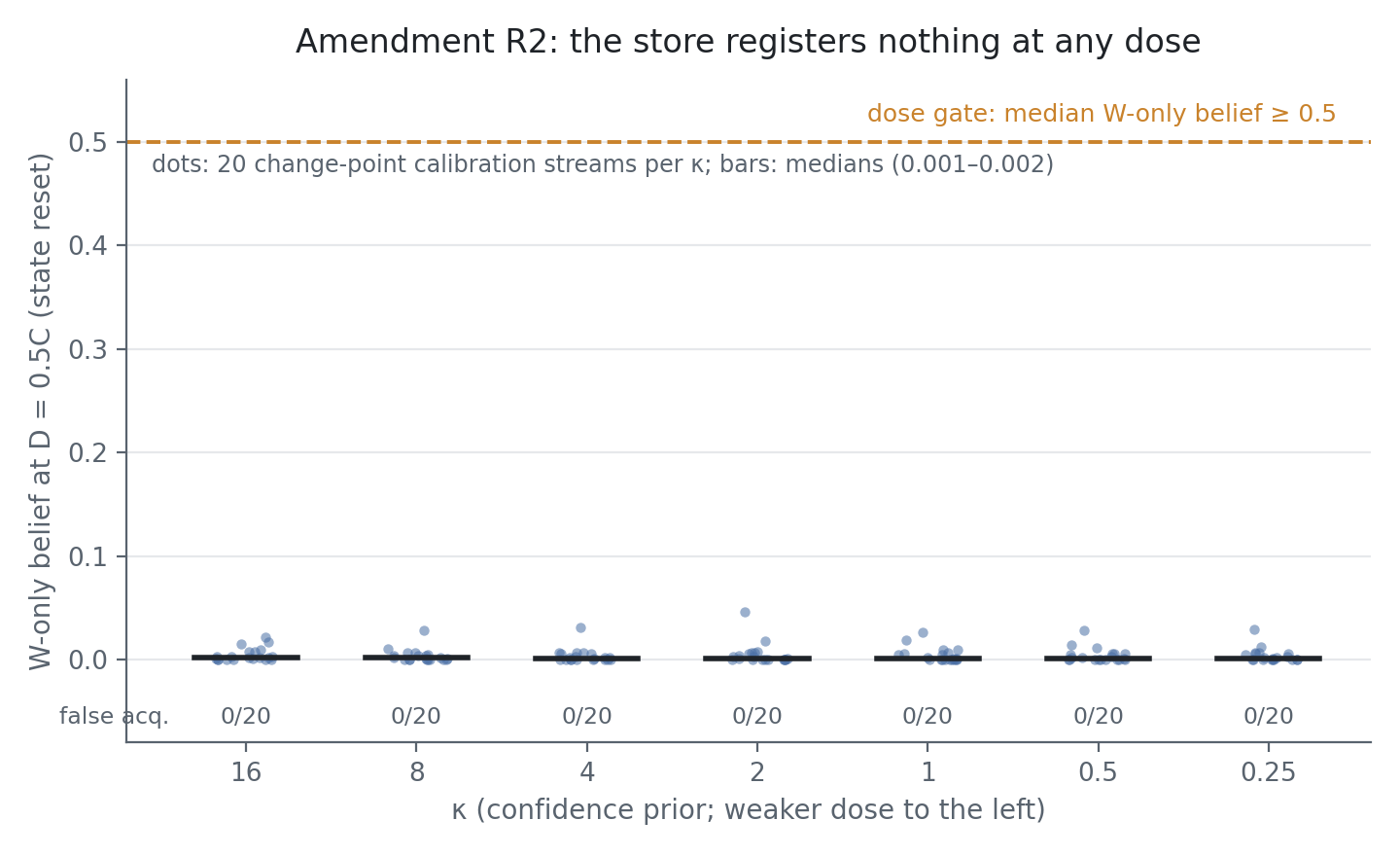
Eight hashed runs on the write channel, and what a gate outcome closes
A week of pre-registered tests asking whether a surprise-gated write channel adds anything an in-context prior lacks. Every prediction file was hashed before scoring; every gate stayed where it was; the predictions were never scored, eight times, and the eighth run explained the other seven.
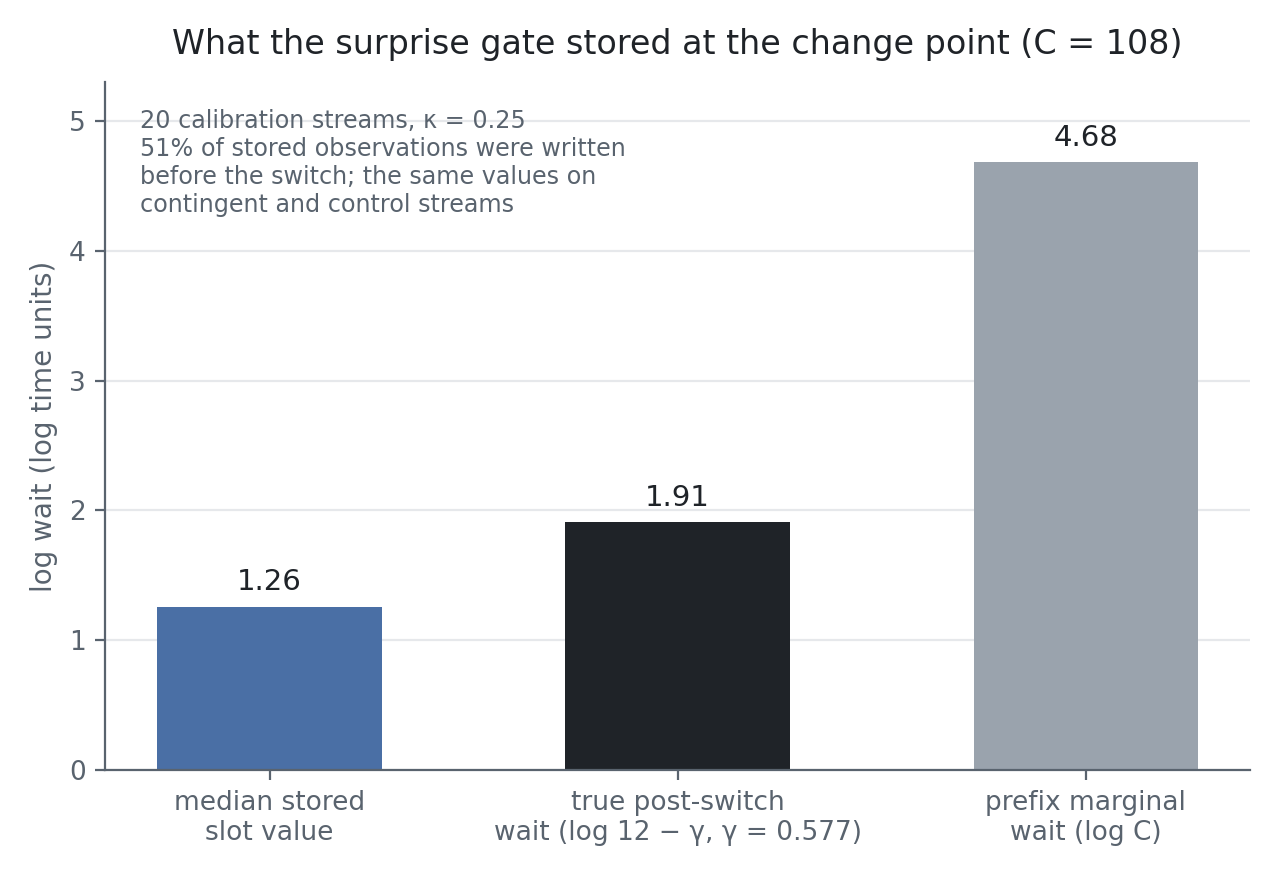
The surprise gate is a biased sampler
A write channel gated on prediction error never opened where the meta-trained prior was good. Moved to streams where the prior is wrong, it wrote, but only chance-short waits, the same on signal and control: half the store filled before the change point, and the stored value sat at 1.26 log units against a true 1.91. The exploratory diagnostic that closed the error-surprise gate as an operationalisation and named its replacement.
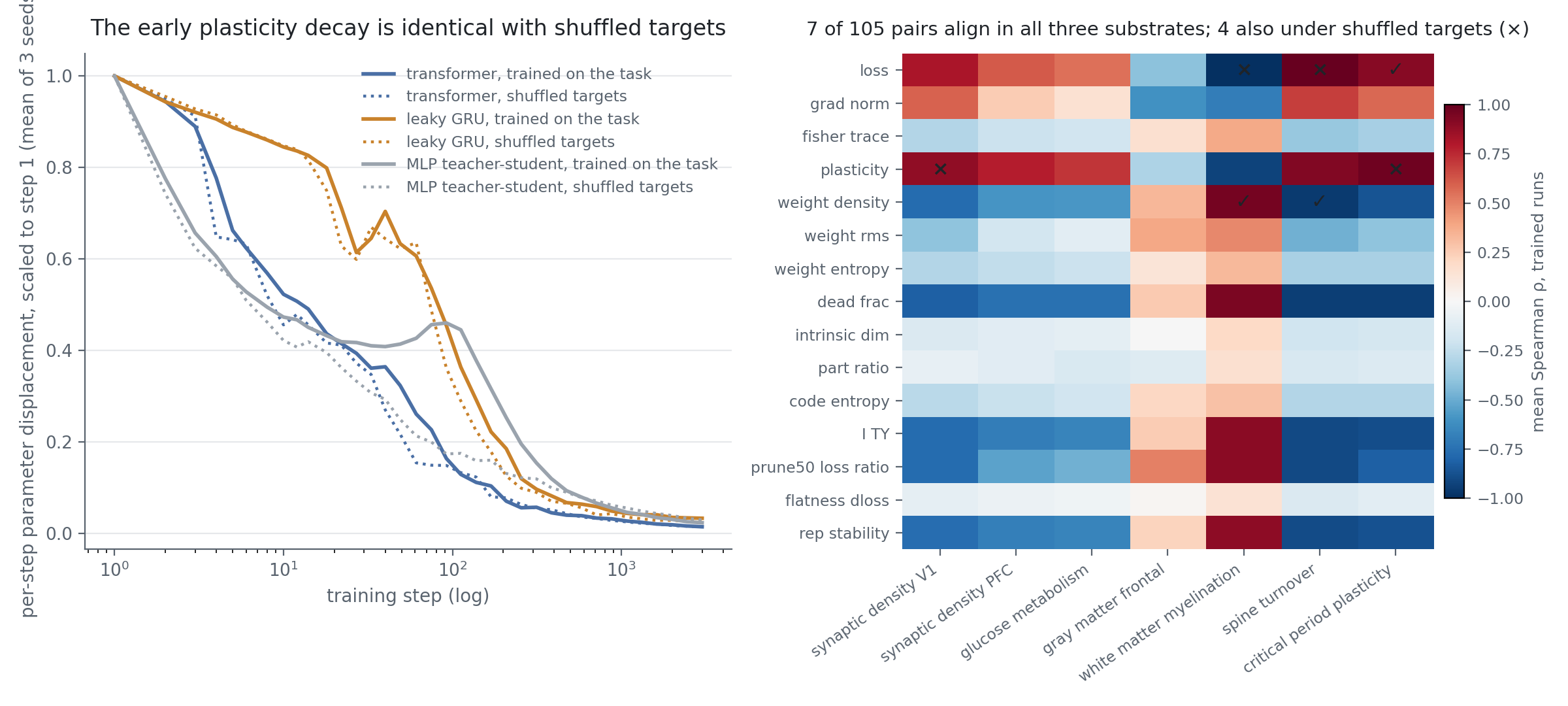
Every curve looks like development
Fifteen training-trajectory metrics on three small networks against seven reconstructed developmental curves: 7 of 105 pairs align in every substrate, four of them also under shuffled targets, and all seven are a monotone or decaying curve against another. The battery's own shape classifier reported an early inverted U that review traced to a filled-in missing value. A shuffled-target control should be mandatory for any claim of this kind.
No critical period in a small network
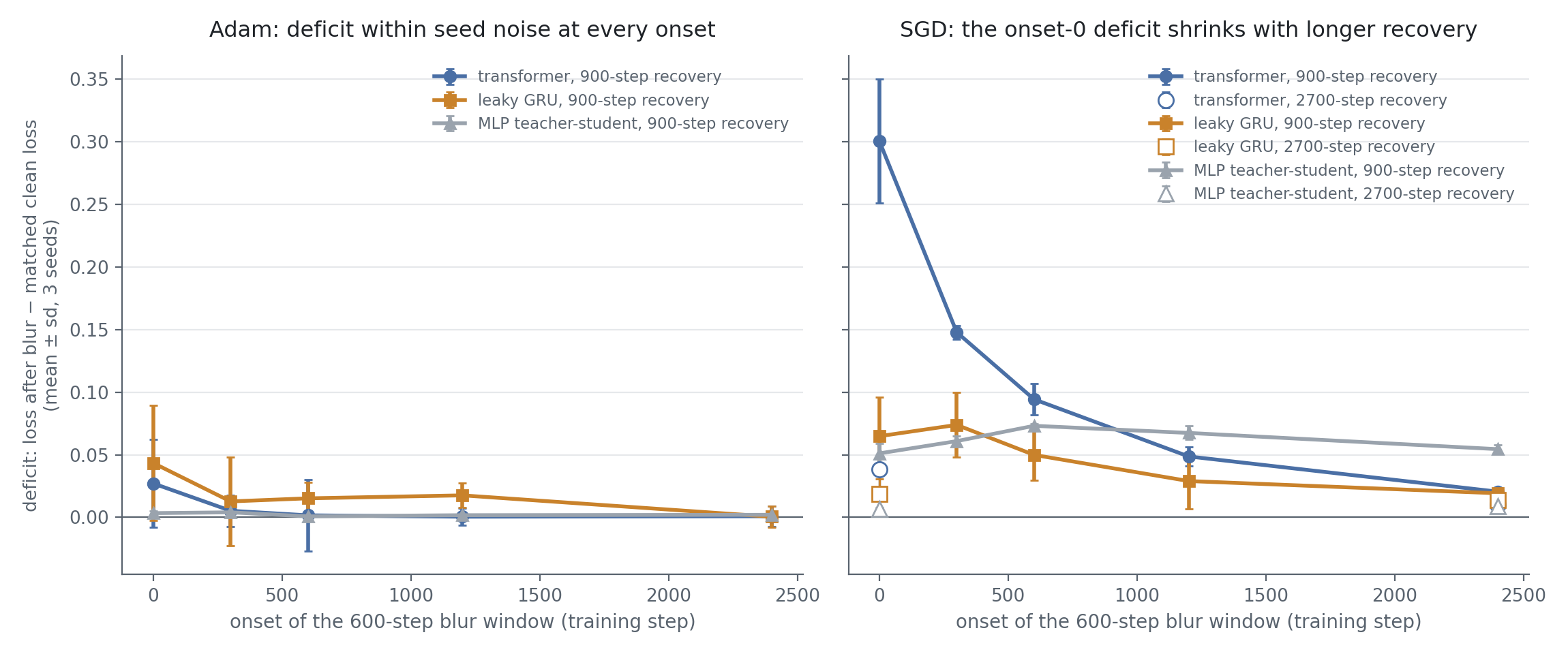
A 600-step input deficit at five onsets, on three small networks under Adam and SGD. Under Adam the deficit is within seed noise at every onset. Under SGD it is largest at onset 0 and shrinks eightfold when recovery is tripled, from 0.30 to 0.038 on the transformer, still positive in all three seeds and still falling: recovery-limited on the evidence, not shown to be zero. What Achille's convnets add that these runs did not.
Sixty nats
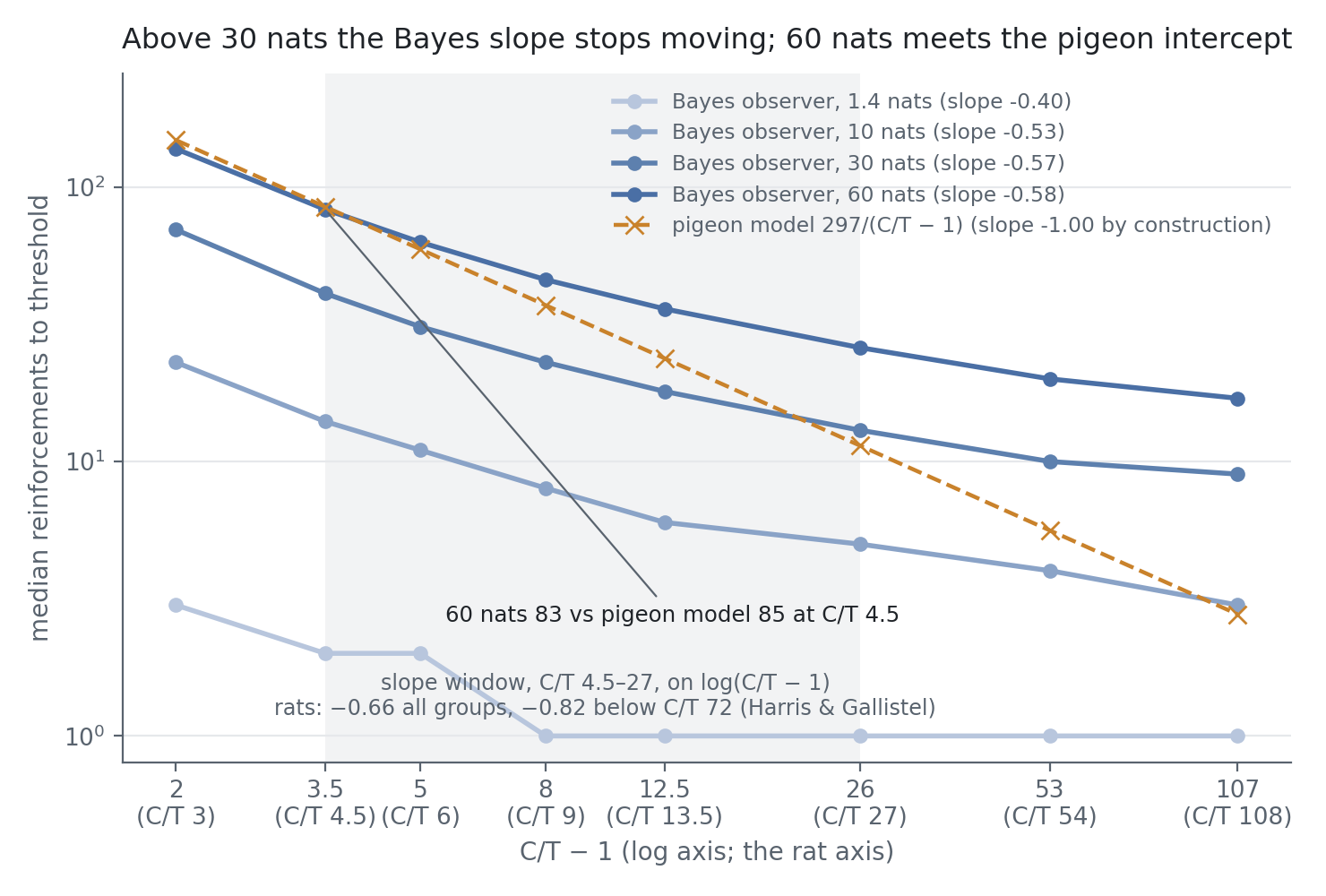
An ideal rate observer's trials-to-threshold slope on the animal axis, log(C/T − 1), stops moving above about 30 nats, at −0.57 to −0.58 over C/T 4.5 to 27, against −0.66 for rats across all groups and −1 by construction for the one-parameter pigeon model. At 60 nats it also lands on the pigeon intercept, 83 trials against 85 at C/T 4.5. One fitted parameter, one free prediction.