Robotics
A new dimension to access content of this website
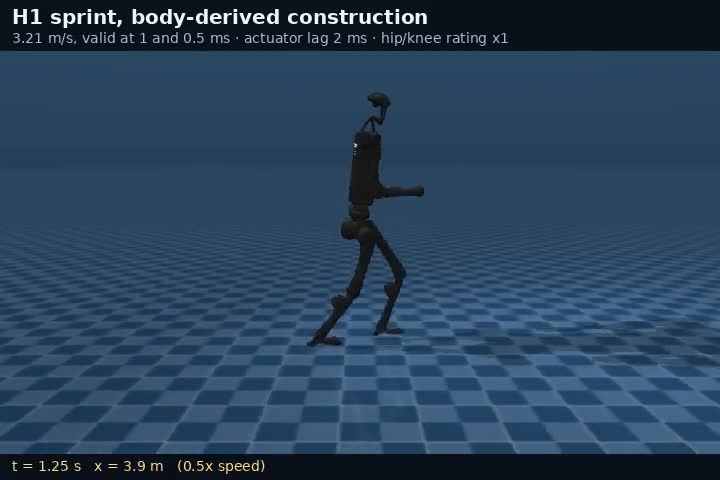
Humanoid movement through physics and optimization
Deriving jumping, throwing, running, and carrying motions from robot geometry and motor limits in MuJoCo. Simulation studies across humanoid bodies without human demonstration data.
Balance and leverage in simulated robot carrying
Experiments with arm-balanced head loads and wheeled luggage, including motor-lag tests, load limits, and attachment assumptions.
Designing a robot jump from its physical limits
Comparing body-derived and human-retargeted jumping strategies, investigating the role of crouch depth, and developing a simulated box jump with controlled landing.
Grasping and force-controlled manipulation
Developing a simulated finger grasp and brush-wiping task, and identifying the manipulation capabilities needed before attempting more complex household tasks.
Generating robot movements without demonstrations
The inputs, search budget, and hand-designed structure behind this physics-based movement pipeline, and the limits of its no-demonstration claim.
From tennis technique to robot movement
How my experience playing and coaching tennis led to a simulation project on deriving movement from a robot’s geometry and motor limits.
Running, walking, and actuator limits
Testing simulated humanoid locomotion across bodies, measuring the role of ankle torque, and separating demonstrated gaits from unvalidated capacity predictions.
Whole-body throwing through physics-based search
How simulated throwing develops a coordinated kinetic chain, what changes under valid motor limits, and how the method extends to aiming and kicking.