Neuro-symbolic
A new dimension to access content of this website
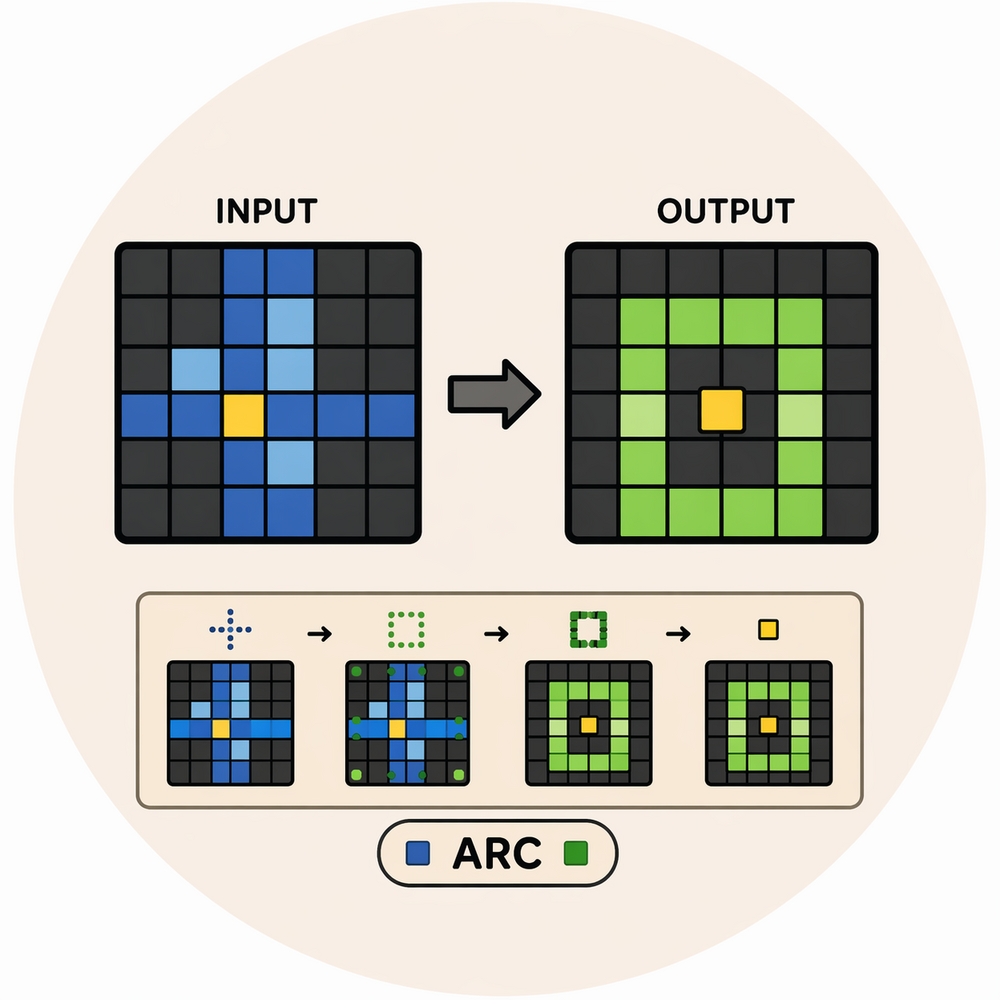
ARC Prize 2026: a neuro-symbolic architecture for both tracks
Entries on the static ARC-AGI-2 and interactive ARC-AGI-3 tracks, built to find where a deterministic program layer and a probabilistic model layer each stop, and an architecture that alternates them.
Competitor — ARC Prize 2026
Interactive games: an agent that acts, checks, and remembers
How the ARC-AGI-3 entry was built: a language-model policy wrapped in deterministic guards, a scheduler derived from the score function, and a memory that carries a solved level's rule forward.
Neither a prover nor a guesser
What two ARC Prize 2026 tracks taught me about generalization: a solver that only proves cannot cover the tasks, a solver that only guesses cannot know when it is right, and the architecture has to carry both.
Static puzzles: a generator and a verifier
How the ARC-AGI-2 entry was built: a test-time-trained language model for coverage, a sandboxed program verifier for truth, and the measurements that put the handoff between them.