Kaggle
A new dimension to access content of this website
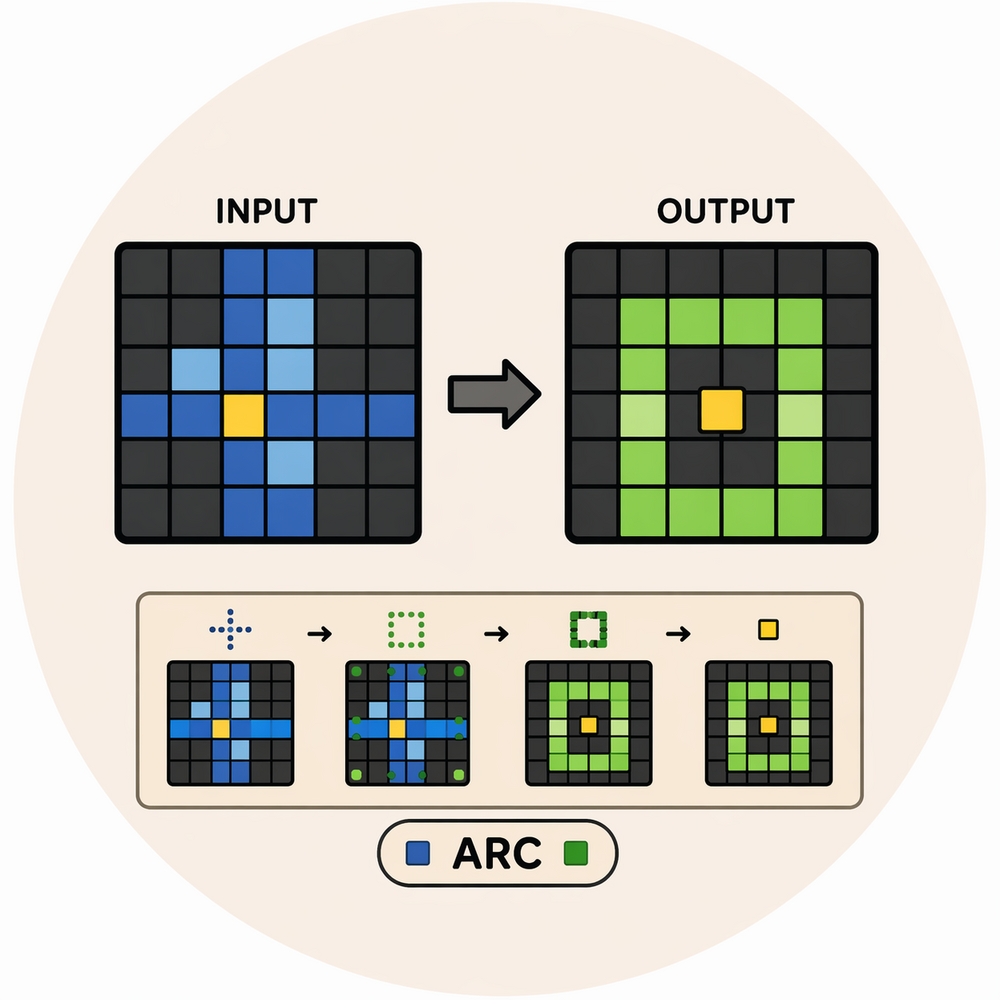
ARC Prize 2026: a neuro-symbolic architecture for both tracks
Entries on the static ARC-AGI-2 and interactive ARC-AGI-3 tracks, built to find where a deterministic program layer and a probabilistic model layer each stop, and an architecture that alternates them.
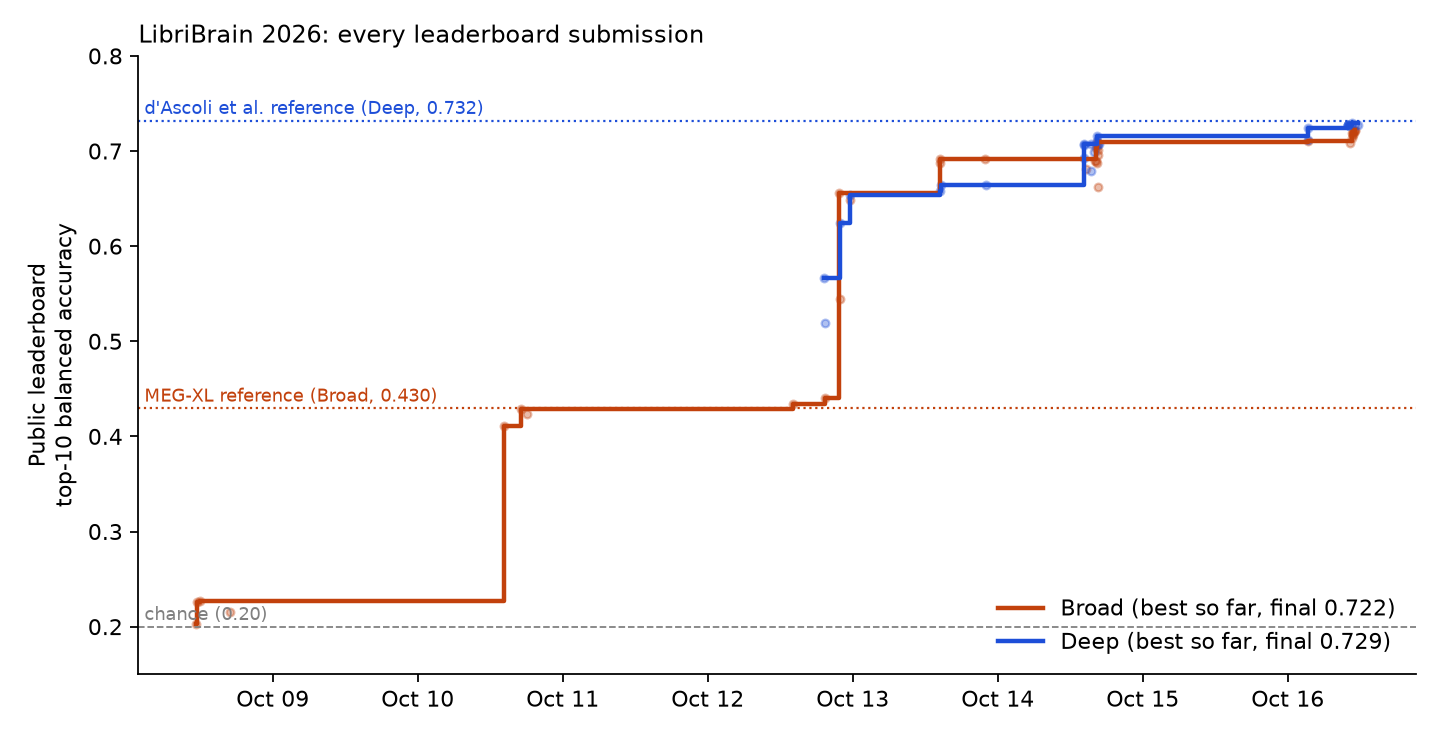
LibriBrain 2026: decoding speech from MEG
MEG word decoding for LibriBrain 2026: public scores of 0.722 on Broad and 0.729 on Deep; final private ranks 17th of 53 (Broad) and 26th of 91 (Deep). Includes transfer learning, test-time adaptation, and an evaluation of timing-only baselines.
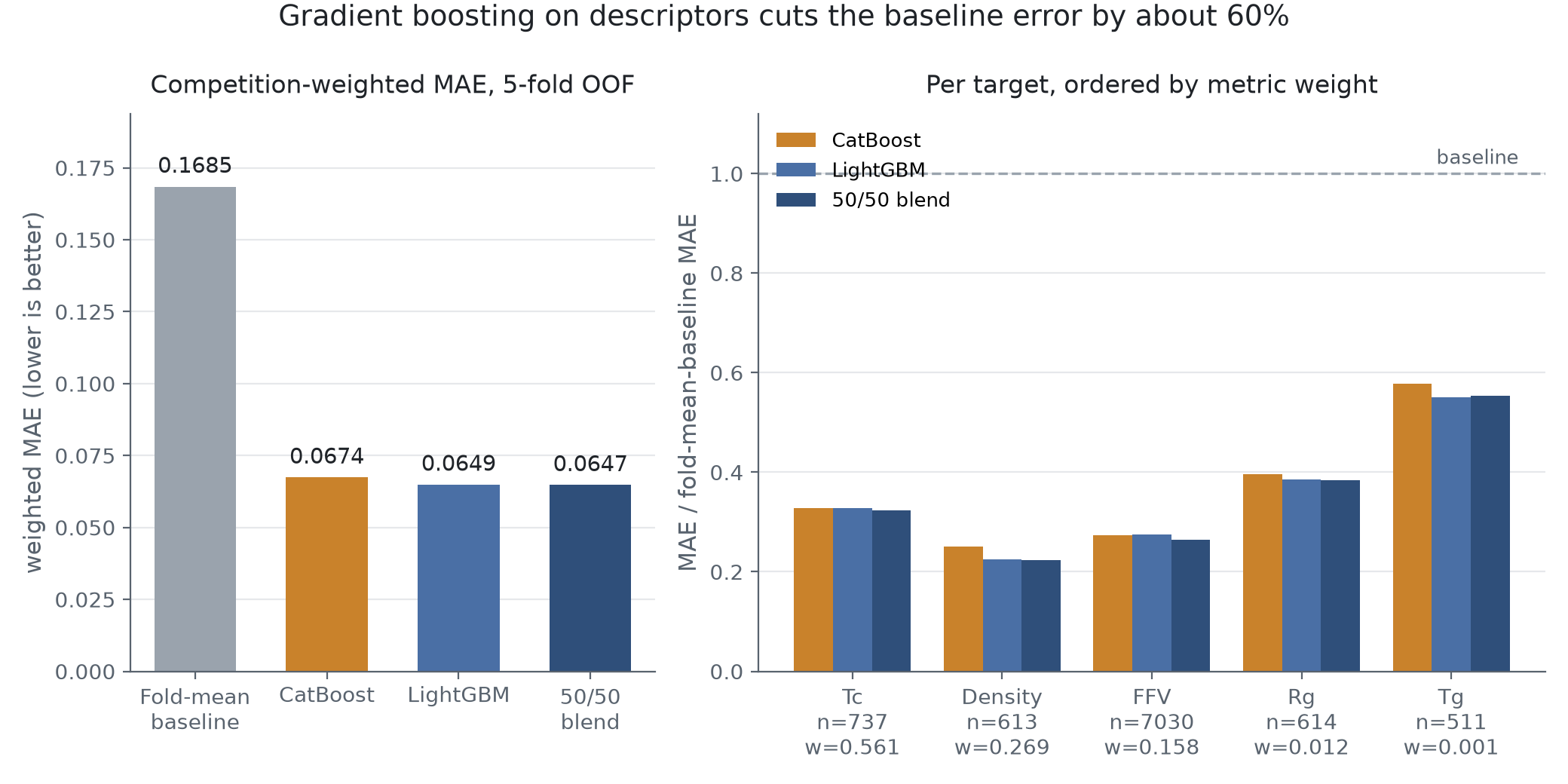
Polymer property prediction
Per-target LightGBM and CatBoost on ~2,600 Mordred, RDKit and fingerprint descriptors for the NeurIPS 2025 polymer challenge: 5-fold grouped OOF weighted MAE 0.0649, against 0.168 for predicting the mean.
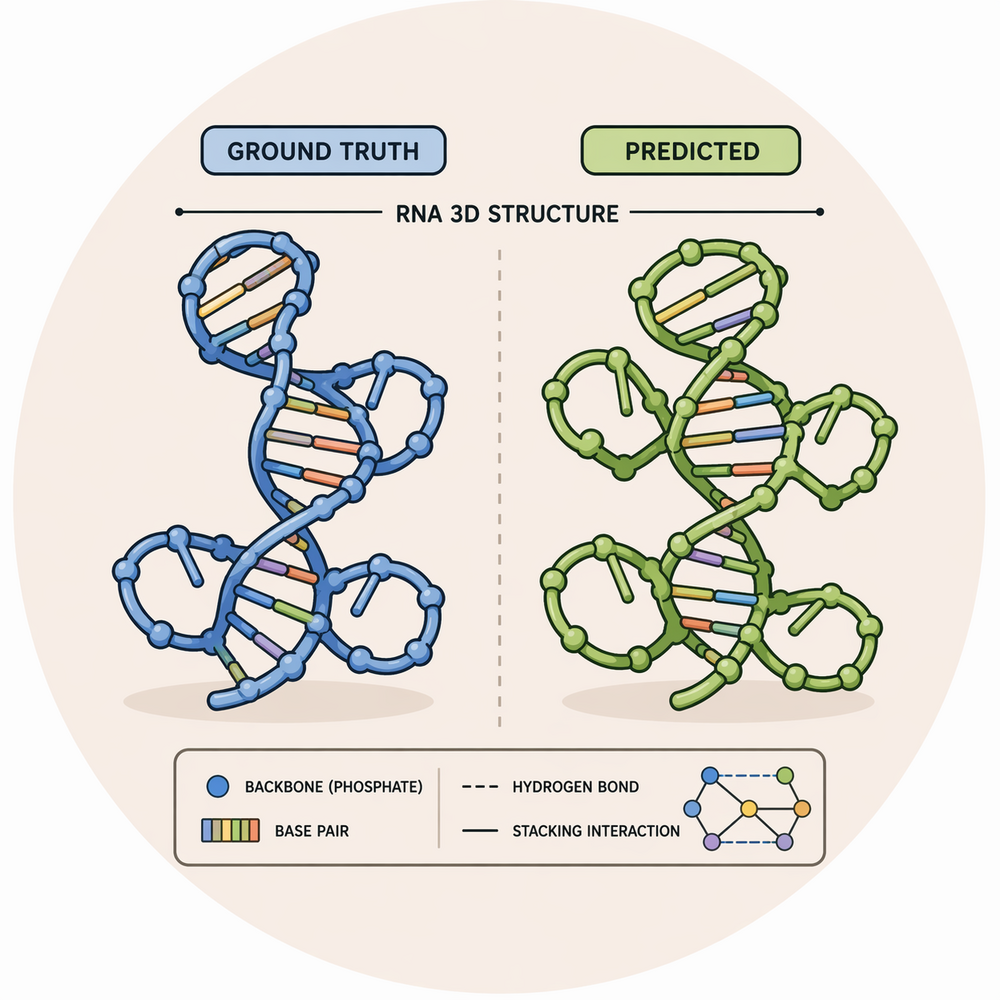
RNA 3D structure prediction
Stanford RNA 3D Folding on one 8 GB GPU: a 488M-parameter diffusion model run within its memory, a sequence-aligned TM-score harness, and a 45-stage template folder over 9,564 PDB RNA structures.
Competitor — NeurIPS Open Polymer Prediction
Competitor — Stanford RNA 3D Folding
Interactive games: an agent that acts, checks, and remembers
How the ARC-AGI-3 entry was built: a language-model policy wrapped in deterministic guards, a scheduler derived from the score function, and a memory that carries a solved level's rule forward.
Static puzzles: a generator and a verifier
How the ARC-AGI-2 entry was built: a test-time-trained language model for coverage, a sandboxed program verifier for truth, and the measurements that put the handoff between them.
Building my LibriBrain speech decoder
How I developed the LibriBrain entry: changing the training target, transferring across listeners, testing sentence-level context, and evaluating shortcuts under competition constraints.
Eighth in public, seventeenth in private
What the LibriBrain private leaderboard did to my final standing, which interventions survived the second split and which reversed, and what that implies for choosing final submissions.
What timing reveals about MEG decoding benchmarks
Technical notes from LibriBrain 2026: contextual training targets, cross-subject transfer, test-time adaptation, and a timing-only baseline that changes how decoder scores should be interpreted.
The timing twin: a noise control that keeps the word onsets
Noise controls for MEG word decoding remove the onset-locked response that every real recording contains. A twin with synthetic onset responses, and a floor computed from event times alone, show how much a fixed window can learn from timing. With real background and the real onset response, timing accounts for about a fifth of the decoder's margin.