Connectomics
A new dimension to access content of this website
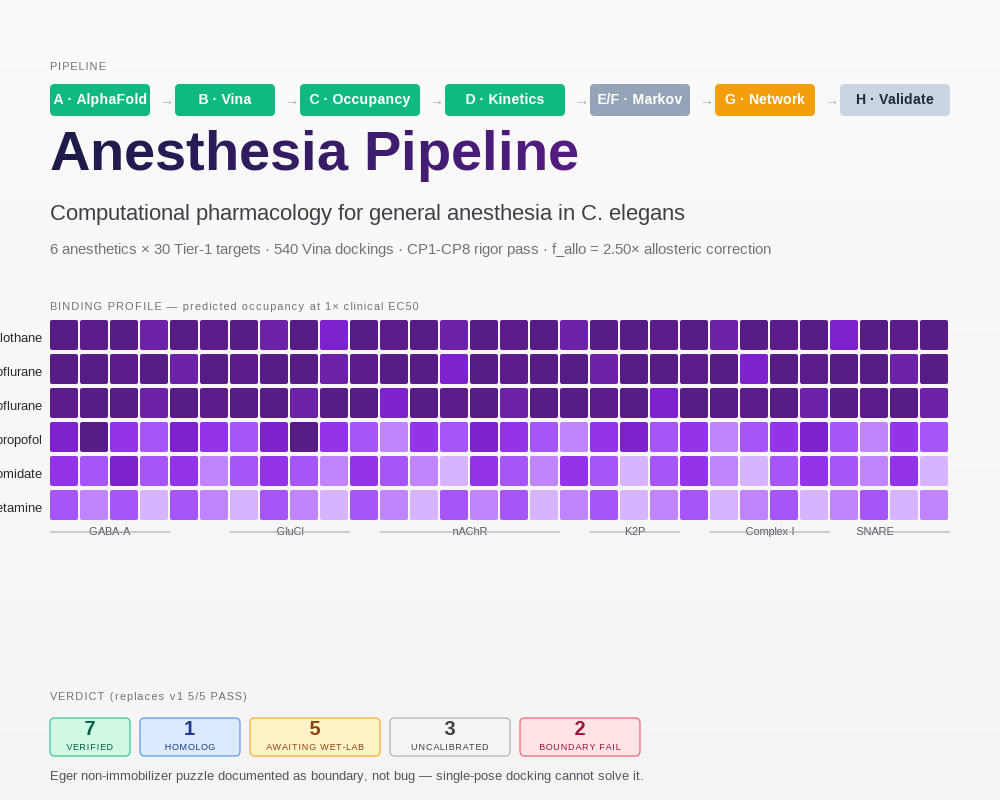
Modeling anesthesia and reversible neural states
Computational models of anesthetic perturbations, tested against published pharmacology across worm, fly, and mouse calibrations, alongside a literature map of reduced-activity states.
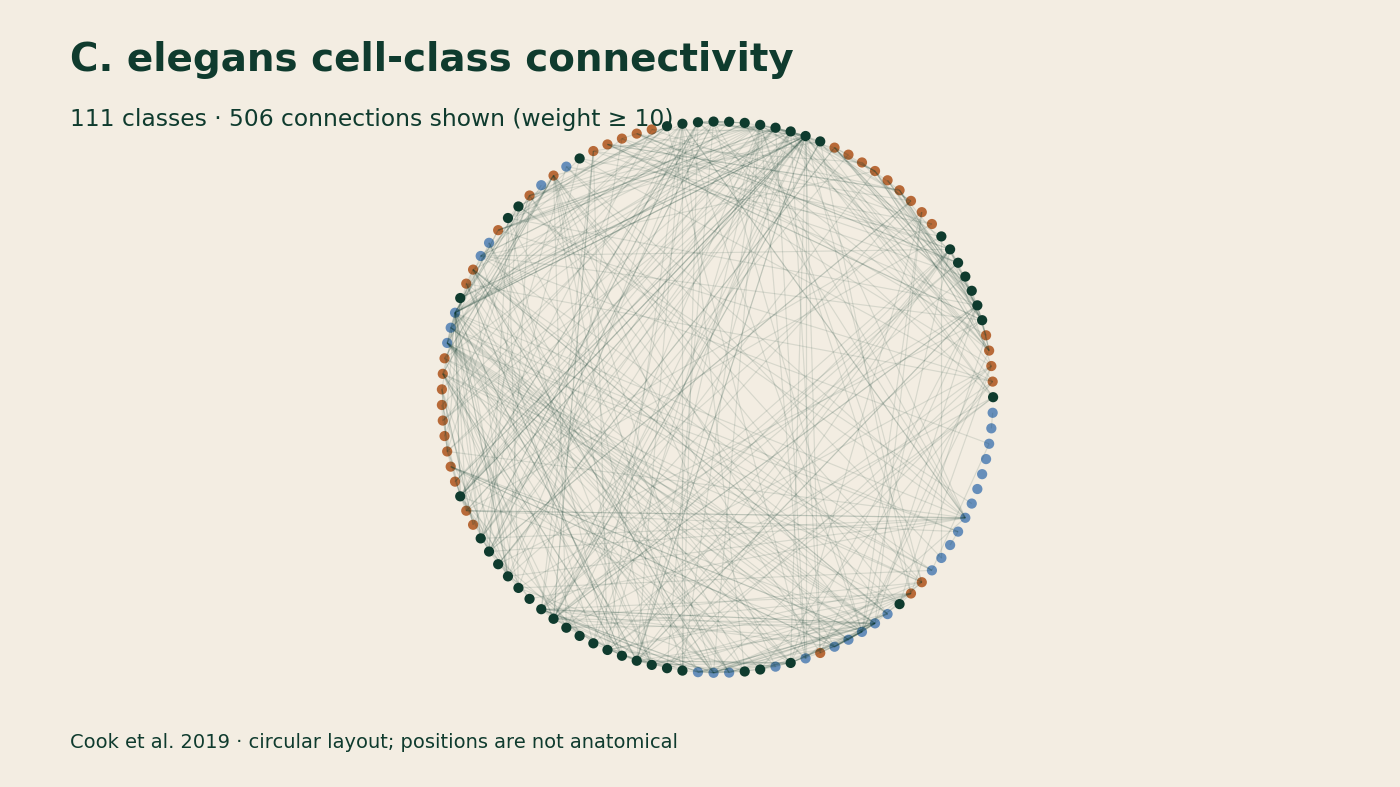
C. elegans: connectivity, gene expression, and simulation
A computational neuroscience learning pipeline combining connectomics, gene expression, neural models, and an interactive worm simulator, with documented validation limits.
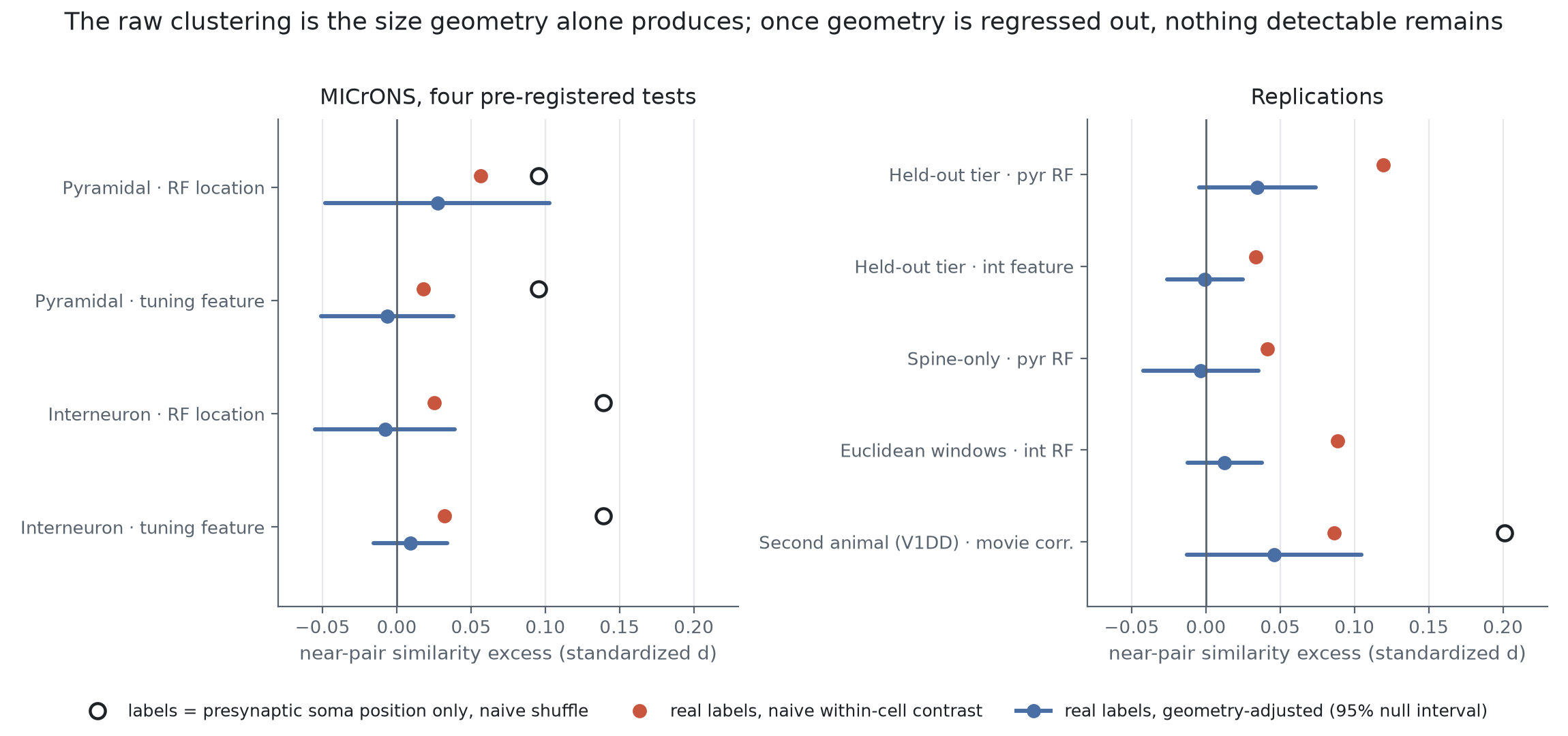
Dendritic input clustering in MICrONS is presynaptic geometry
Do co-tuned inputs land together on cortical dendrites? In MICrONS the standard shuffle test calls pure soma geometry clustering (p = 0.001); adjusted for it, receptive-field placement is bounded at d ≤ 0.019.
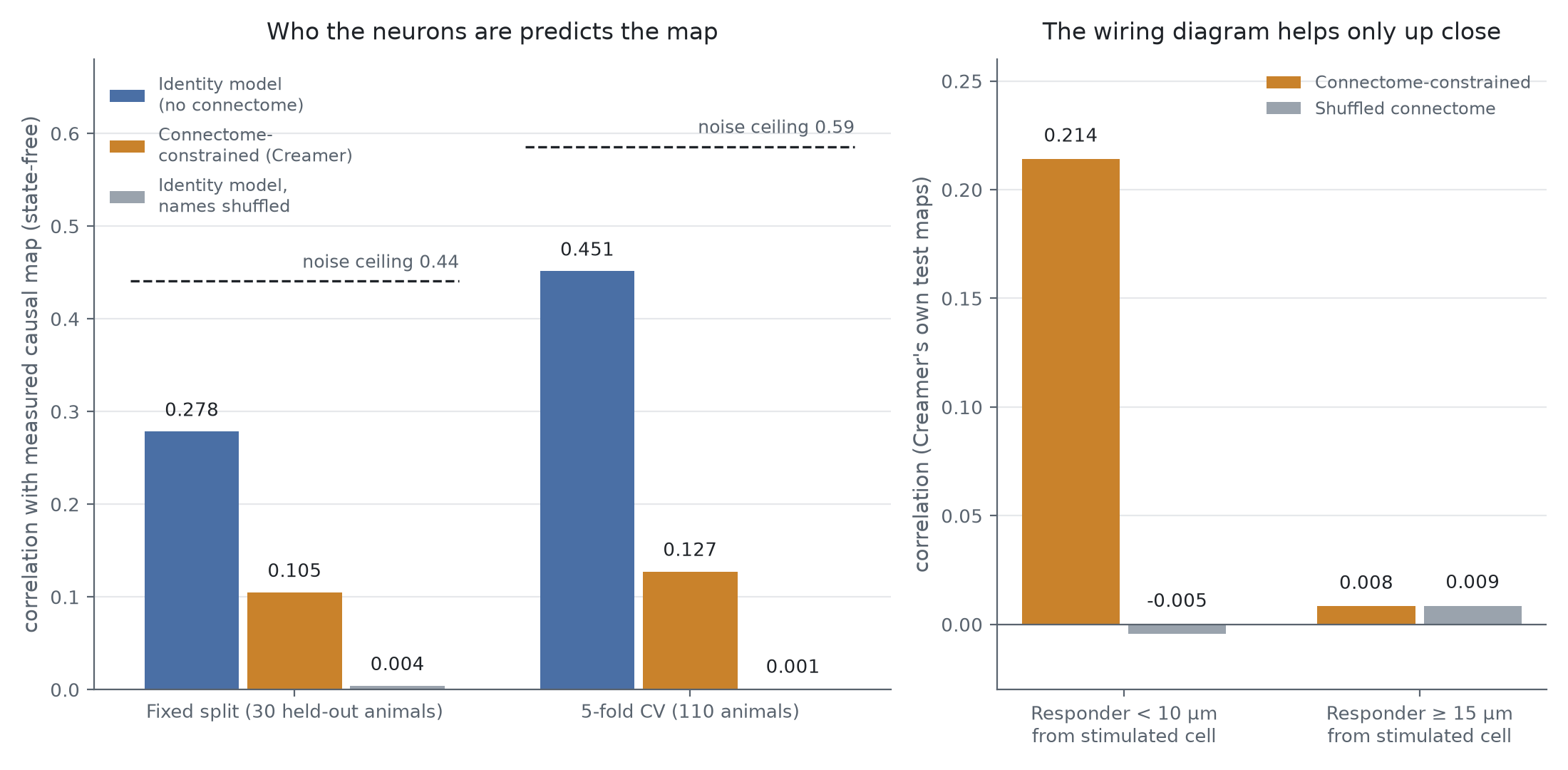
Predicting causal signal flow in the C. elegans brain
Predicting how stimulating one C. elegans neuron moves the others in unseen worms: neuron identity reaches 77% of the noise ceiling (r = 0.451); the wiring diagram helps only within ~10 µm.
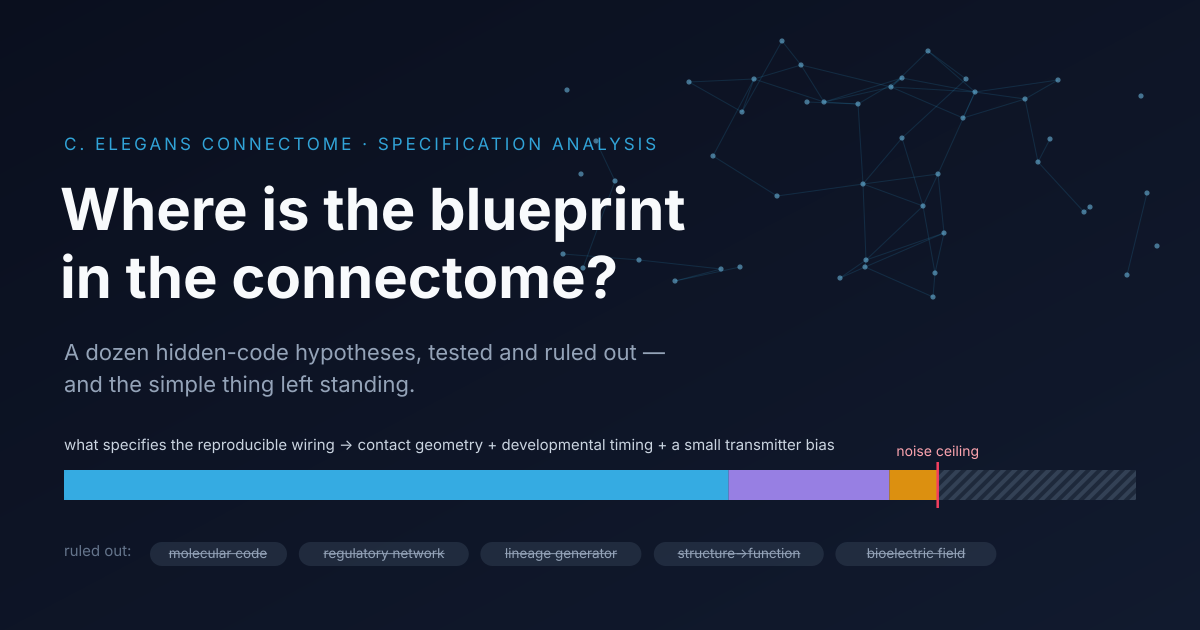
How development shapes the C. elegans connectome
Testing how physical contact, developmental timing, and molecular signals account for reproducible wiring in C. elegans, using matched controls and held-out connectomes.
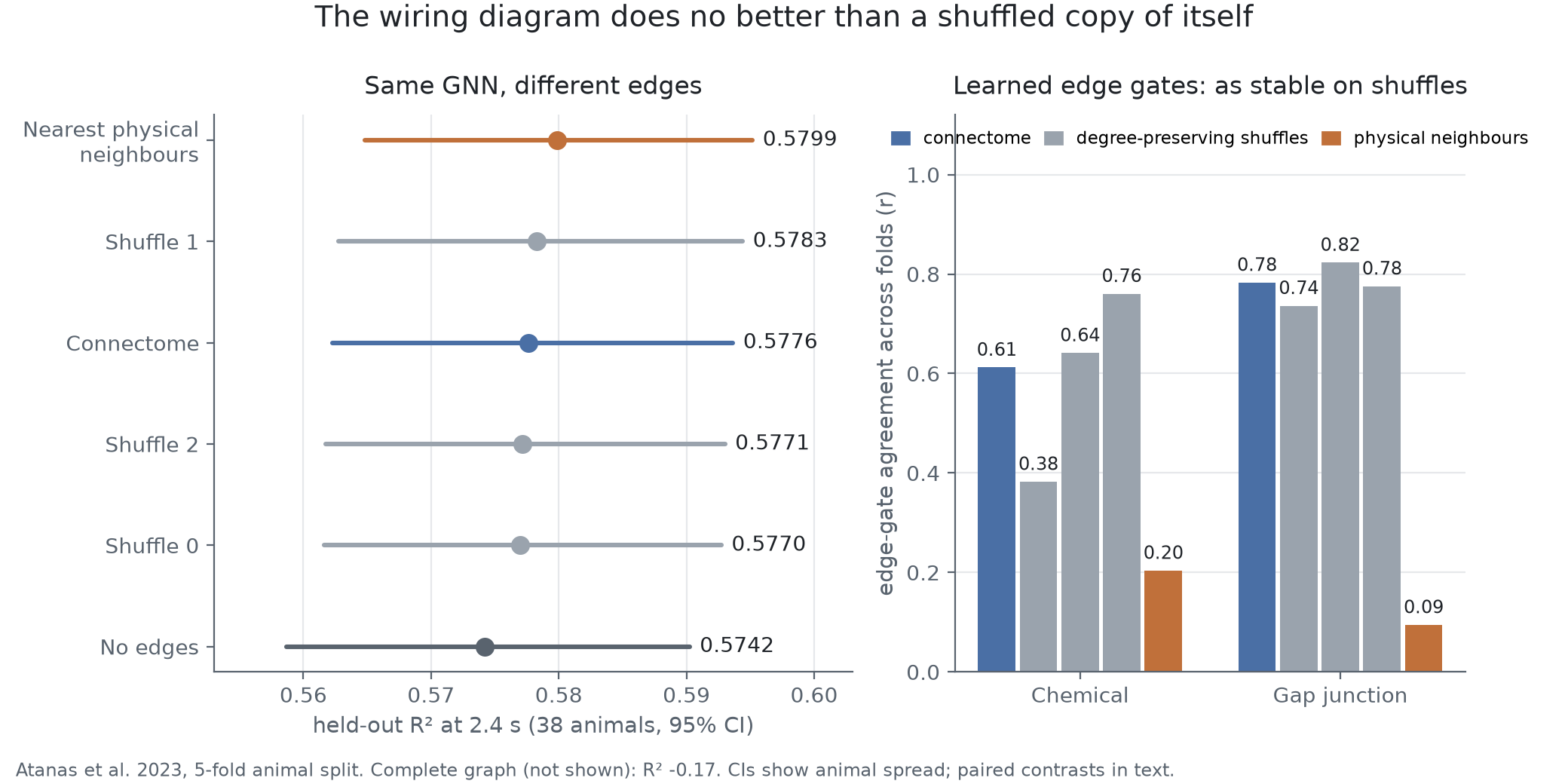
Connectome Graph Dynamics
Frozen held-out benchmarks on public whole-brain C. elegans data: in a learned graph network the real connectome scores the same as degree-preserving shuffles (+0.0001 R² [−0.0007, +0.0009]).